
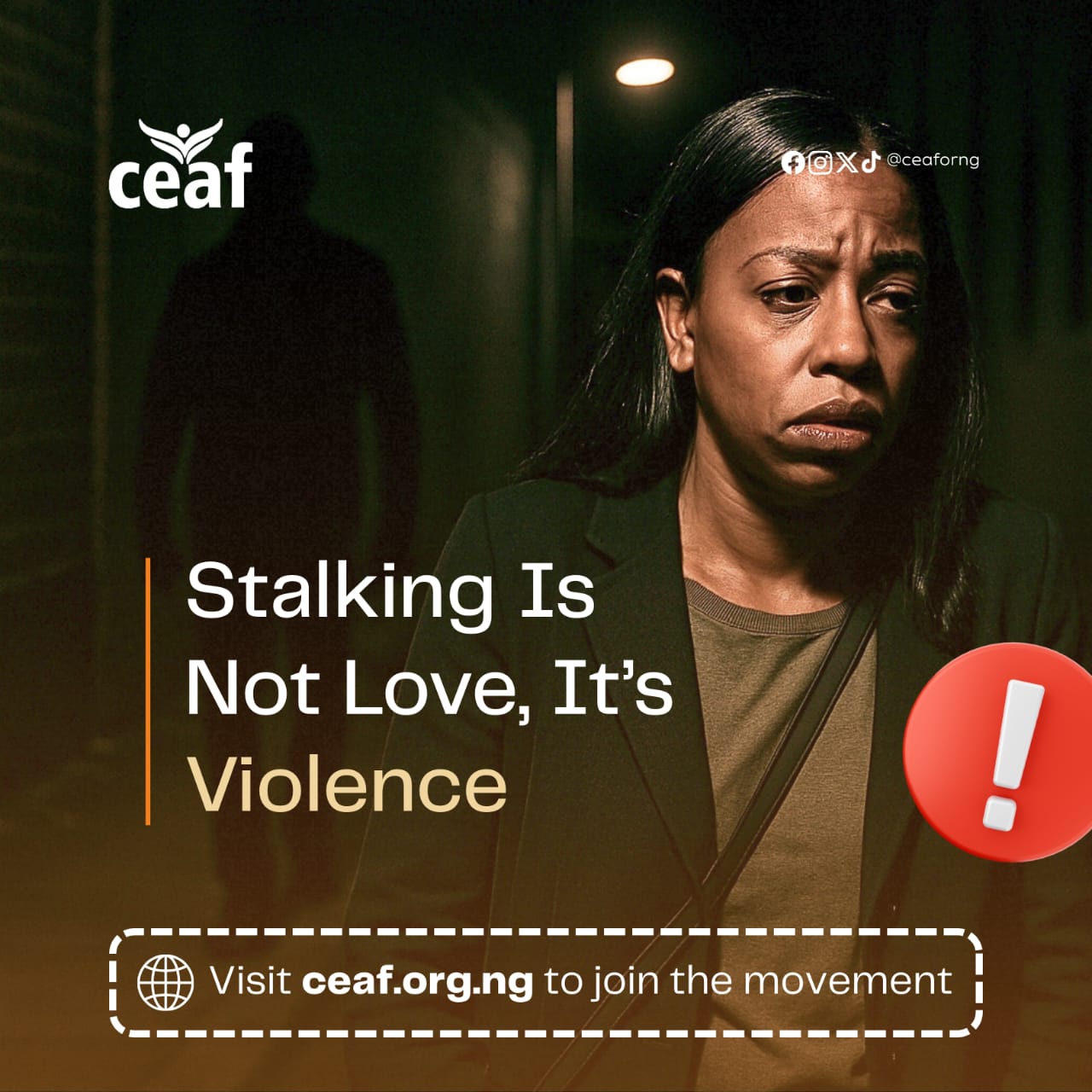
When people hear the word “stalking,” many dismiss it as a minor nuisance. Some even confuse it with romance. “He just likes you too much,” they say. “She’s only showing affection.” But the truth is this: stalking is not love, it is abuse. It is an insidious crime that slowly drains life out of its victims, leaving scars not just on the body, but deep within the mind.
What Stalking Really Is
Stalking is a pattern of repeated, unwanted attention that creates fear. It is not a one-off phone call or a casual meeting. It is relentless and deliberate. Victims are pursued, monitored, and harassed until their lives no longer feel like their own.
Examples of stalking behavior include:
* Following someone to school, work, or home.
* Constant, unwanted calls, texts, and online messages.
* Tracking someone through social media or technology.
* Showing up uninvited at their house, workplace, or places of leisure.
* Sending unwanted gifts, notes, or even threats.
* Using silence and intimidation as a reminder: “I am watching you.”
In short, stalking is about power and control. It is about stripping victims of their right to safety and freedom.
The Myths vs The Reality
Many believe stalkers are strangers lurking in the shadows. The reality is far more chilling: most stalking cases involve someone the victim knows a former partner, friend, colleague, or even a family member.
Another dangerous myth is that stalking is harmless unless it turns violent. But stalking itself is violence. It is psychological warfare. Victims lose their sense of safety, constantly living on edge, checking over their shoulders, and second-guessing their every move.
* The Emotional and Psychological Toll
* The scars of stalking are invisible, but they run deep:
* Victims experience anxiety, depression, and hypervigilance.
* Sleep becomes a luxury, eaten up by fear of being watched or attacked.
* Trust is shattered in people, in institutions, even in themselves.
* Many develop Post-Traumatic Stress Disorder (PTSD).
Imagine a young woman who can no longer walk freely to class because an ex-boyfriend waits outside her gate every morning. Picture a man whose phone vibrates hundreds of times daily with unwanted calls. Think of the child whose parent’s former partner drives past their school repeatedly, sending silent messages of threat. This is not a drama. This is not attention-seeking. This is terror in slow motion.
The Culture of Dismissal
In too many cases, victims are silenced before they are heard. Families dismiss their fears with, “He’ll get tired soon.” Friends advise, “Don’t overreact.” Authorities say, “There is nothing we can do until he hurts you.”. And so, stalking thrives in silence. It thrives in a culture that mistakes obsession for passion, and harassment for persistence. This silence emboldens stalkers, while victims are left feeling powerless and alone.
When Stalking Turns Deadly
* Stalking is not always the end in itself often, it is the beginning of something worse. Across the world, countless cases of domestic violence, acid attacks, and even murders have roots in stalking behaviors that were ignored.
* A woman reports that her ex has been following her and threatening her online. She is told to ignore him. Weeks later, she was attacked and was killed.
* A student complains about being trailed home daily. The school calls it “childish crush behavior.” Months later, tragedy strikes. The pattern is clear: what we ignore today becomes tomorrow’s headline.
The Role of Society
To fight stalking, society must change its mindset:
1. Stop trivializing it. Stalking is not affection. It is abuse.
2. Break the silence. Communities, schools, workplaces, and families must take every report seriously.
3. Challenge the stigma. Victims should not be blamed or mocked for speaking up.
4. Strengthen protections. Many countries, including Nigeria, lack strong anti-stalking laws. Where they exist, enforcement is often weak. Victims deserve better.
What Victims and Parents Must Do
* Teach children and young people about boundaries and body autonomy.
* Encourage open communication: let them know they will not be blamed if they speak out.
* Document everything: keep records of messages, calls, and encounters.
* Seek legal and community support immediately.
Hope in Action
CEAF (Comfort Empowerment and Advocacy Foundation) believes stalking must never be minimized. Through awareness campaigns, advocacy, and survivor support, we are breaking the silence around issues people would rather sweep under the carpet.
Every victim deserves to be believed. Every community must be safe. Every stalker must know this truth: their actions are crimes, not compliments.
Conclusion
Stalking is not about love , it is about control. It is not passion , it is possession. And it is not harmless , it is violence waiting to happen. We cannot wait for another tragic headline before acting. We must listen. We must protect. We must act.
0 Comments